


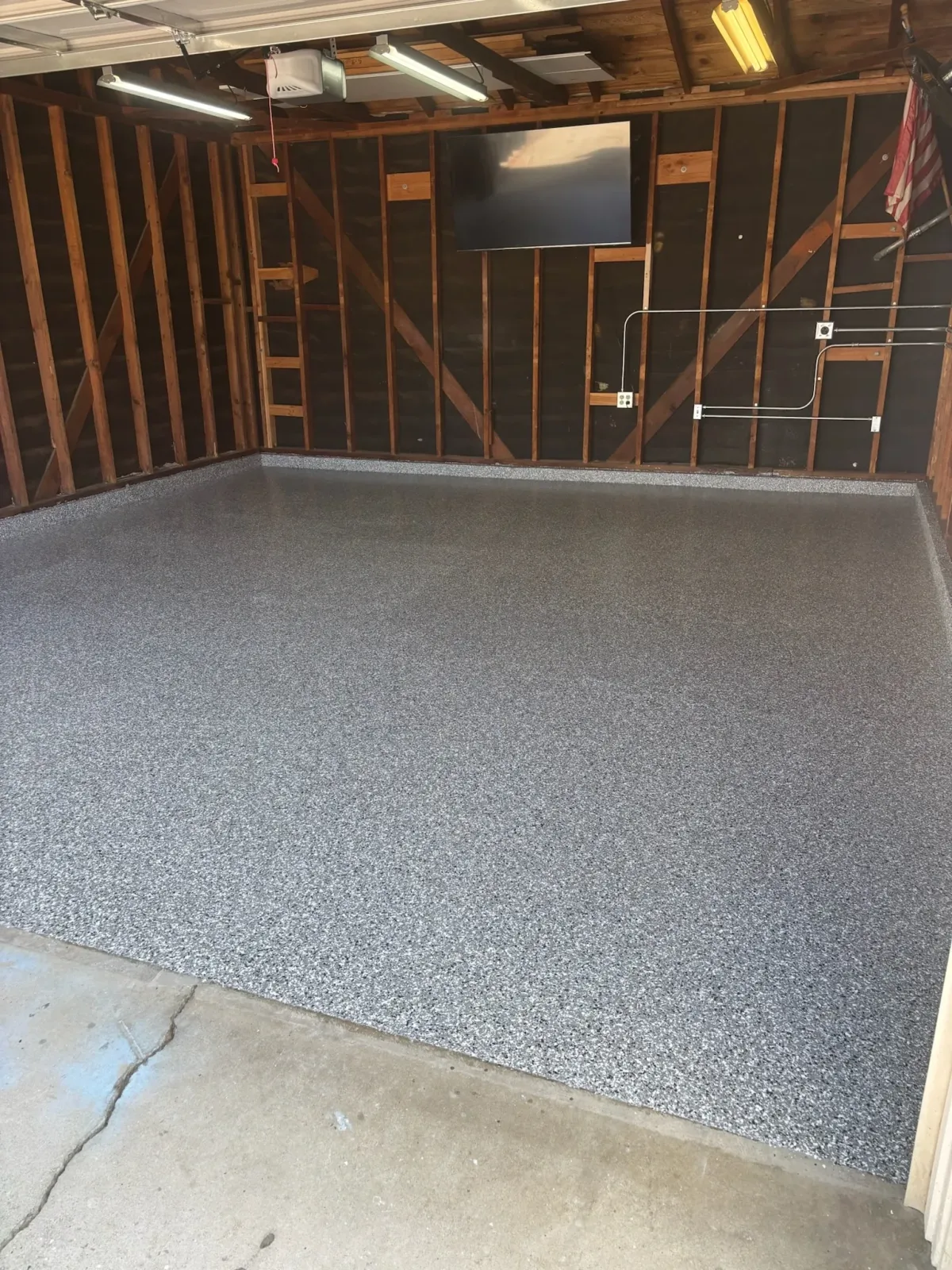
Polyaspartic vs. Epoxy vs. Polyurethane | Garage Floor Options
When considering a flooring upgrade for your home or business, the sheer number of options can feel overwhelming. Among the most popular industrial and residential solutions are polyaspartic coatings, epoxy resin and polyurethane.
Each offers distinct advantages, and selecting the right one depends heavily on your specific needs, the environment and your aesthetic goals. Whether you are looking for epoxy garage floors remodel ideas or need a heavy-duty industrial solution, understanding how these materials perform is key to a long-term investment.
Understanding the Material Landscape
To make an informed decision, it is important to look at how these materials function as part of a flooring system. While consumers often focus on the final look, the underlying chemistry determines how your floor handles daily life.
Epoxy Resin: The Foundation of Industrial Floors
Epoxy floor coatings have long been the industry standard, and for good reason. Epoxy is a thermosetting resin that provides exceptional adhesion to concrete substrates. It is incredibly durable, making it an ideal choice for high-traffic areas.
One of the primary benefits of using epoxy as a build coat is its ability to level out surfaces, creating a seamless, high-performance finish. Epoxy provides excellent impact resistance, shielding floors from heavy machinery, dropped tools and daily wear in industrial settings. However, traditional epoxy does have limitations. Over time, epoxy can yellow when subjected to direct sunlight. If your floor will be exposed to significant UV rays, you might find yourself needing a more specialized topcoat.
Polyaspartic Coatings: The Modern Powerhouse
Polyaspartic coatings represent a significant advancement in concrete floor technology. Originally developed for heavy-duty industrial settings, these coatings have become a favorite for both residential and commercial spaces.
The most notable advantage of polyaspartic technology is its UV stability. Unlike many traditional epoxies, polyaspartics do not yellow, making them the superior choice for areas with high UV exposure, such as showrooms, outdoor patios and sun-drenched garages. Furthermore, they offer rapid cure times, often allowing for a full installation in just one day. This minimal downtime is a massive benefit for businesses that cannot afford to close for an extended period.
Beyond speed and clarity, polyaspartics offer:
Wider application temperatures:They can be installed in conditions where epoxy might fail to cure properly.
Excellent chemical resistance:They stand up to oils, solvents and cleaning chemicals exceptionally well.
Greater flexibility:They are less prone to cracking under minor concrete movement than rigid epoxies.
Polyurethane
Polyurethane is rarely used in modern floor coating systems. Polyaspartic coatings outperform polyurethane in UV resistance, overall durability, scratch resistance and hot tire pickup resistance (when hot vehicle tires pull the coating away from the concrete). As a result, polyurethane has largely been replaced by polyaspartic technology for most residential and commercial applications.
Deep Dive: Selecting the Right Solution
Evaluating Your Environment
If your project involves exterior concrete surfaces, you should prioritize materials that can handle constant exposure to sunlight and weather. Polyaspartic is widely considered the ideal choice because it withstands direct UV exposure without degrading or changing color. Conversely, if you are working on an interior warehouse or manufacturing facility where heavy equipment is common, an epoxy build coat provides the structural foundation required to handle demanding conditions.
Balancing Cost and Speed
While polyaspartic systems offer incredible benefits, they often come at a premium compared to traditional epoxy. However, you must factor in the cost of downtime. If you are a business owner needing to resume operations within 24 hours, the speed of a polyaspartic floor often makes it the more cost-effective solution despite the higher initial investment.
A Note on Aesthetics
For many homeowners, the visual appeal is just as important as physical durability. Using our visualizer can help you decide how different finishes look in your specific space, allowing you to experiment with colors and textures before finalizing your plans. You can also browse our gallery to see how these materials perform across a variety of successful projects.
How Effective Is Each Garage Floor Coating Material?
To help you compare the differences, the table below summarizes how these three popular materials perform across critical categories. Ratings use a 1-10 scale, with 10 representing the highest level of performance.
The Role of Professional Installation
It is important to remember that the chemistry of these coatings is only half the battle. Proper preparation of the concrete substrate is non-negotiable. Whether you choose epoxy or polyaspartic, the longevity of your floor depends on how well the surface is cleaned, repaired and mechanically profiled before application.
Attempting a DIY installation often leads to premature coating failure if moisture issues are overlooked or the concrete is not prepared correctly. Working with experienced professionals ensures the coating system is installed under the proper conditions, allowing it to deliver the performance expected.
Get the Floor You've Always Wanted
Choosing between these high-performance materials does not have to be a guessing game. Whether you need the structural strength of epoxy resin or the fast-curing, UV-stable properties of a polyaspartic coating, the goal is a beautiful, durable and functional floor built to last.
If you are ready to transform your concrete surfaces, our team at Epoxy Floor Pros is here to guide you through the process. We understand the nuances of concrete preparation and can help you select the ideal coating system for your specific environment.
Ready to start your flooring project? Book a quote with Epoxy Floor Pros today and let our experts help you build a floor that stands the test of time.
